
How to Use a Daily Planner When You Have ADHD
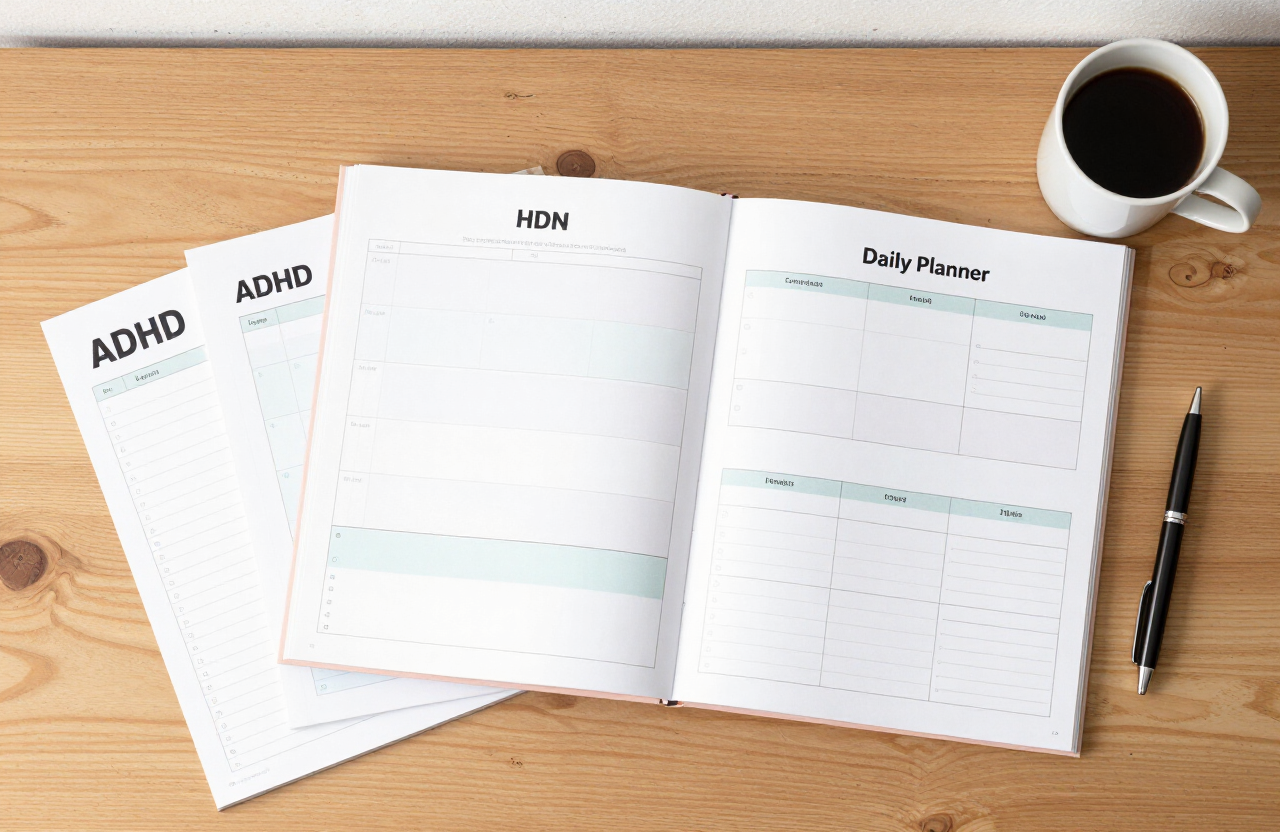
A practical, ADHD-friendly guide to picking and using a daily planner: fewer decisions, visible priorities, flexible routines, and progress over perfection.
Author: Bruce Caldwell
Why a Daily Planner Helps with ADHD
A daily planner gives an ADHD brain something it craves: an external system for holding priorities, time, and tasks so they don't all have to be held in working memory at once. The goal isn't a perfect planner — it's a system built around a few core principles: fewer decisions, visible priorities, flexible routines, and progress over perfection.
Choosing a Planner That Works for You
Any planner can work if it matches how your brain operates. Look for a layout that includes space for:
- A short list of top priorities for the day (3 items, not 10)
- Time blocks or an hourly schedule, so tasks are tied to actual time slots
- A "brain dump" area for stray thoughts, so they don't derail your focus
- A quick way to track habits like sleep, water, movement, or medication
- Room for a short evening reflection
Use pencil, sticky notes, or erasable pens so your system can evolve as you learn what works.
How to Use It Day to Day
1. Start with three priorities, not a full to-do list
Long to-do lists overwhelm an ADHD brain and make it hard to know where to start. Each morning (or the night before), pick the three things that matter most and write only those at the top of the page.
2. Time-block your day
Assign rough time windows to your top priorities and recurring commitments. You don't need to schedule every minute — just enough structure to create momentum and reduce decision fatigue about "what's next."
3. Use a brain dump space
Whenever a random thought, worry, or idea pops up, write it in a dedicated brain dump section instead of chasing it immediately. This keeps you on task while making sure nothing gets lost.
4. Track habits and self-care
Simple checkboxes for sleep, hydration, movement, and medication (if applicable) turn easy-to-forget routines into visible daily cues.
5. Reflect briefly each evening
At the end of the day, jot down one win and one first step for tomorrow. This closes the loop on today and removes the friction of deciding where to start the next morning.
ADHD-Friendly Strategies to Pair with Your Planner
- Time blocking — assign tasks to specific chunks of time rather than leaving them open-ended.
- Body doubling — work alongside another person (in person or on a call) to stay accountable.
- Task chunking — break large tasks into smaller, clearly defined steps you can check off.
- Habit stacking — attach a new habit to an existing routine, like reviewing your planner right after your morning coffee.
- Environmental cues — keep your planner somewhere you'll naturally see it, like next to your keys or laptop.
- Reward systems — build in small rewards for completing priorities to reinforce the habit.
Building the Habit
Consistency matters more than complexity. Start by using just one or two sections — like the top-three-priorities and evening reflection — before adding more. Review weekly to spot patterns, and review monthly to adjust your system as your routines change.
Frequently Asked Questions
Q. Do I need a special ADHD-specific planner?
No. What matters more is that the layout matches ADHD-friendly principles: fewer decisions, visible priorities, flexible routines, and progress over perfection. A plain notebook, printable template, or app can all work if you build the right habits around it.
Q. What if I fall behind or skip a day?
That's normal. Don't try to "catch up" on missed pages — just start fresh on the current day. Progress over perfection means the system should flex around real life, not add guilt.
Q. How much should I plan for each day?
Keep it light. Three priorities, a rough time-blocked schedule, and a short evening reflection are usually enough. Overloading the page creates the same overwhelm a planner is meant to solve.